
Around the time I entered middle school, my mother and her mother spent a year not speaking. Plenty of families experience these types of estrangements, which can make the holidays tense or even a time of grieving.
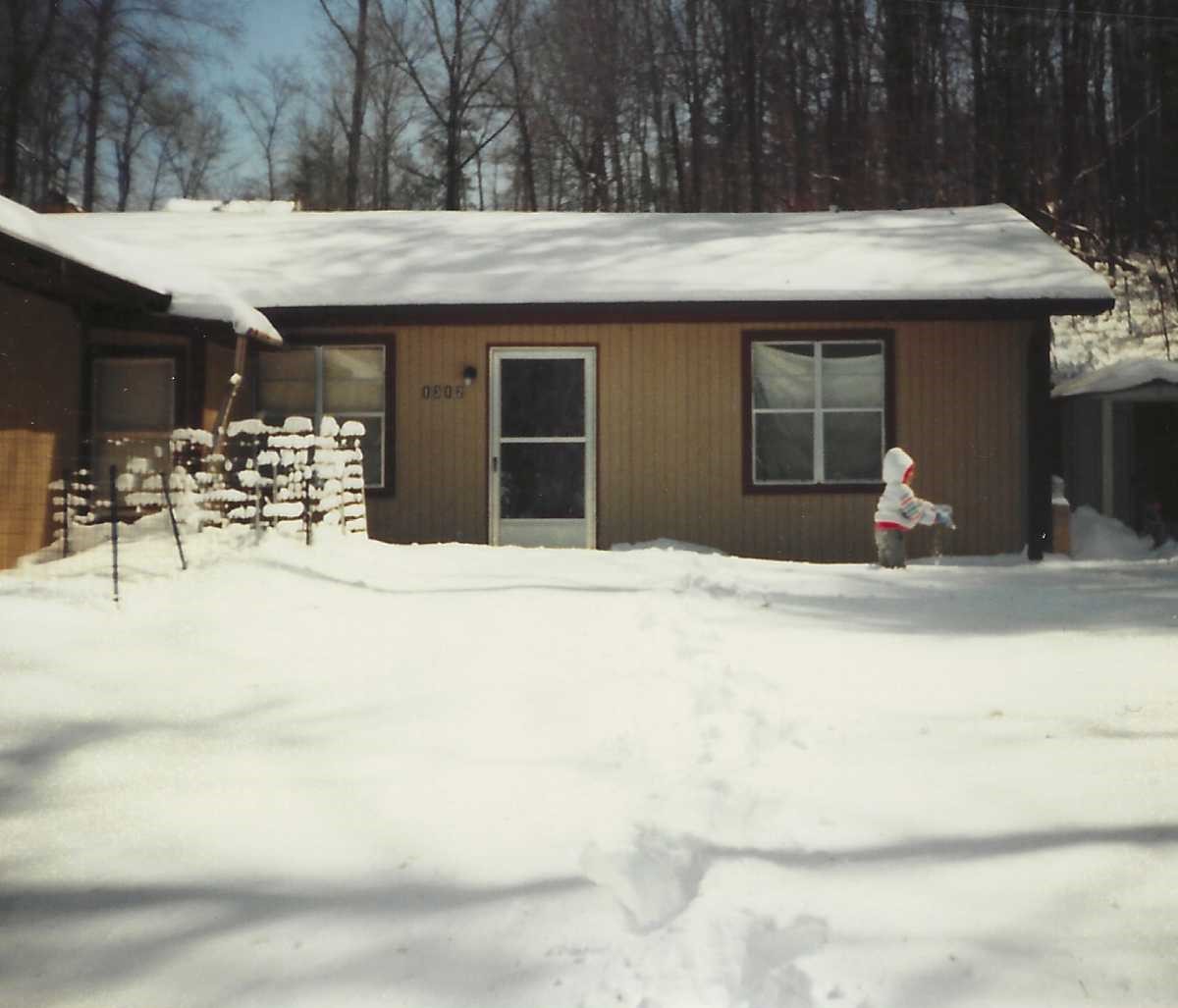
What made my mother’s estrangement from her own mom odd was not the length itself but how long they managed to pull it off while living in the same house. Eleven years earlier, when my mother found herself pregnant and in the middle of a divorce, my grandmother and step-grandfather devised the perfect plan. They built a cottage-sized home off their back spare bedroom. My nursery became the portal between the two—windowless but with two doors.
On Falling Out Day, our home became a back-to-front duplex. My mother walked into my pre-teen bedroom with a box of lawn-sized garbage bags, a roll of duct tape, and a pair of scissors. An hour later, I had a plastic-covered door and a sealed-off floor vent. The latter was my only clue to what prompted the argument.
For most of my childhood, I had been mortified to have anyone over to the house other than the best friend I made in kindergarten. It was getting harder to explain the roar of barks you could hear before you’d even reached our street’s dead-end sign. Or the undeniable dog smell that assaulted you before even reaching our yard.
“… widowhood had created a lonely void even a live-in daughter and two grandchildren could not fill.”
My mother never told me how the fight started. It was probably a day my grandmother rescued yet another dog from the kennel where she worked. It was definitely the day we lost count of my grandmother’s canine population.
A former dance teacher, my grandmother did not reach this point because her lifelong passion had been animals. Her career as a dog groomer began later in life when my step-grandfather died of a heart attack. The house addition had just been completed when my grandmother found herself both grieving and in need of a job.
In the decade since then, widowhood had created a lonely void even a live-in daughter and two grandchildren could not fill. Like many animal hoarders, my grandmother took comfort in being a safe haven for animals who would otherwise be euthanized. She even intended on rehoming many, but a combination of their health issues and her deep attachment got in the way more than it didn’t.
My mom’s fur-siblings had by this point already received their own addition to the house—a raised-deck kennel on the embankment beside my grandmother’s front porch. But as with any compulsion, more space is simply more room to overfill with the thing we can’t get enough of.
Just 35 years old and already the designated family caregiver, my mother saw clearly these animals would someday be her burden to bear. And caregiving in a family of critics can be especially heavy.
My grandmother spent that year opening her backdoor for the dogs the minute my mom’s car left the driveway. Mail and rent checks no longer exchanged hands but were wedged into fence posts or screen doors. I have a distinct, if imagined, memory of standing halfway between our front door and my grandmother’s back door—less than a dozen feet—and repeating messages they could both clearly hear.
“They eventually spoke, but I don’t think they ever heard each other again.”
I don’t remember how that year ended. They eventually spoke, but I don’t think they ever heard each other again. Each right in their own way, neither could accept they could also be wrong. When two people are determined to misunderstand each other, this will always be the way.
Even estrangements that are necessary to maintain require healing, especially in our family of origin. Developed in the 1980s, Imago Relationship Therapy is rooted in attachment theory and the idea we have an “unconscious image of familiar love.” In order to heal, our wounds will lead us straight to people whose particular brand of love will wound us again and again in exactly the same way.
Grew up feeling abandoned?
Here’s someone whose fear of conflict makes them run away.
Grew up feeling criticized?
Let me introduce you to someone who has learned control is the easiest way to manage their anxiety.
Grew up feeling responsible for others’ feelings?
You and this person with a substance use disorder will really get along.
We all have wounds that need healing. And healing takes work.
We can spend our whole lives blaming others’ wounds for wounding us. We can even convince ourselves the problem is other people altogether.
Or we can do the far braver, more vulnerable thing. We can heal alongside the people who are willing to heal with us. Not just when their wounds pick at the scabs of our own, but especially then.
“We can heal alongside the people who are willing to heal with us.”
In The Year of No Grudges, poet Andrea Gibson talks about the power of co-healing. It’s worth listening to in its entirety, but I’ll leave you with this excerpt.
“I love you
Because we both showed up to kindness tryouts
With notes from the school nurse
That said we were too hurt to participate.
But we learned how wrong we were,
And weren’t those the best days?
The days we learned how wrong we were
And, so, got to grow into our goodness.
Throwing the peach pits of our old selves
Into the garden to grow sweetness.
Sugar.
I pick you
To be the captain of my chosen family tree.”


Leave a Reply